

From silver to sponges, the industries that built the island
These days, Phillip Island is all about tourism. But back before the Penguin Parade existed, even before the bridges were erected, the island’s early pioneers tried their hands at a range of innovative industries, if somewhat bizarre by modern...


These days, Phillip Island is all about tourism.
But back before the Penguin Parade existed, even before the bridges were erected, the island’s early pioneers tried their hands at a range of innovative industries, if somewhat bizarre by modern standards.
This week we look at other ways early islanders made a dollar, from the little-known and short-lived sponge industry, to larger quarries, and even for a short time, tobacco.
Oysters
Occasionally, anglers or beach walkers around Rhyll come across wild oysters on rocks, enjoying a snack of the marine delicacies.
Their find points to the years around 1910 when oysters by the millions were dredged from the bay near Rhyll, with about 40 boats involved.
According to Joshua Gliddon’s book Phillip Island in Picture and Story, Rhyll was the stronghold, although fishermen also came from San Remo, Corinella and Hastings.
“Under supervision by the Fisheries Department, each man was issued with a licence to get seven bags a day,” Joshua writes, adding this was later voluntarily lowered to five.
“Unfortunately the practice of throwing all cleanings and debris overboard covered the beds with refuse.”
This, combined with the loss of men to World War I, saw the industry decline.
More recently an oyster hatchery has been planned for Newhaven.
Phillip Island Oyster Hatchery, at Beach Crescent, is set to produce between 50 and 100 million oyster spat per year, to about 12 weeks of age, which would then be grown out at 400 hectare off-shore lease at Flinders.
Sealing
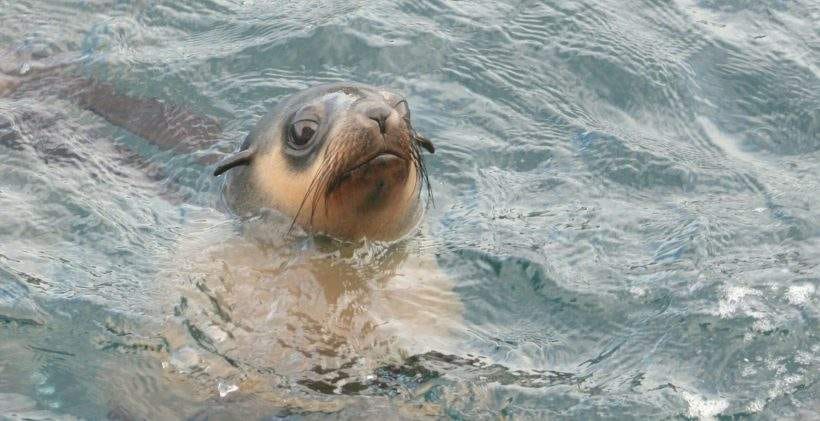
The sealing industry operated through Bass Strait, including Seal Rocks on Phillip Island, from about 1800 to 1830, long before the island was officially settled.
Seal hunting for food and skins had occurred for centuries around the globe, but it was not until the 18th century that the large scale commercial exploitation of seals started.
Aside from the pelts for clothing, oil was rendered down from the blubber for lighting, lubrication of machinery and some manufacturing processes.
Fur seals were herded together and kept from escaping to the sea while they were brutally clubbed.
The animals were skinned immediately and the pelts were salted and usually stored in timber casks.
Black wattle
From the 1830s, hundreds of tons of black wattle bark was stripped by wattle bark (“mimosa”) collectors and shipped out from San Remo to be used in the tanning trade.
The black wattle was a staple food, fibre and medicine tree for the indigenous Bunurong people, and the decimation of the black wattle forests robbed the people of a central part of their lives.
According to the Phillip Island and District Historical Society’s Christine Grayden, while little is known of relations between wattle bark collectors and the Aborigines, “we do know of at least one instance where five Boonwurrung/Bunurong men were killed by wattle bark collectors as the Aborigines slept”.
“It is possible that other similar incidents occurred,” Christine said.
Sponge industry
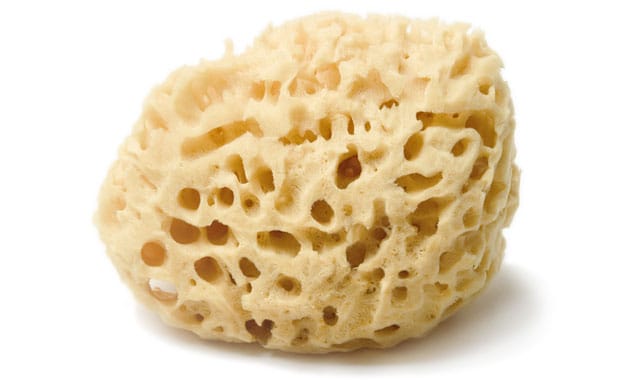
Before the invention of petroleum-based, synthetic products for washing purposes, nature offered her own solutions.
In particular, sea sponges were used, with one early legendary Phillip Island story relating to five Greeks establishing a sponge industry at Cat Bay.
According to Joshua Gliddon’s book, the men erected a series of squares in the water, with a pole at each corner and with lines hanging in between.
“The whole party one day went out on the Western Passage fishing, and whether the boat capsized or was carried on a strong tide out to sea was never revealed,” Gliddon writes.
“Whatever happened, the tragedy was complete. The Greeks were never heard of again.”
Mutton birds
Drop by the San Remo Fisherman’s Co-op and you can sample a mutton bird, sustainably harvested from Flinders Island.
While the birds may be an unusual delicacy by modern tastes, there was a time the birds were sought-after flocally or a range of products.
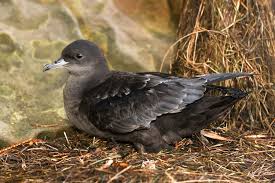
From 1918, it was illegal to gather mutton-bird eggs on Phillip Island, but before that time, Melbourne cake manufacturers sent collectors to Cape Woolamai during shearwater nesting season, where they slept in tents and in one season allegedly collected up to 20,000 eggs.
Some of these were even sold as duck eggs.
A piece of bent wire was used for rolling eggs out of burrows, where venomous snakes were also found and according to a newspaper article of the day, bird, egg and snake could be hooked together.
The birds themselves were often smoked and eaten, while the oil too was sought-after.
The Illustrated Australian News in an article in July 1872 told the story of a group of seasonal visitors who came to the island to obtain the oil by (cruelly) squeezing the birds, which was then used in cooking or burning.
Butter factory and tobacco
Today there is just one dairy farmer left on Phillip Island.
Back in the 1960s there were almost 70. And before that, many early settlers had house cows to supply their milk and butter needs.
From the early 1900s a butter factory operated out of the historic Rhylston Park, on Thompson Avenue, until the 1930s.
Rhylston Park owner J Vaughan also ran the Lion Rolling Mills in Melbourne, which employed 600 people to manufacture iron and steel, with the butter factory created to supply this staff.
Joshua Gliddon writes that the butter plant was sold in 1938, by which time it had become obsolete.
It was around that time, in the 1930s, that the Stoppa brothers experimented with tobacco farming.
“It was proved the island conditions were favourable to the production of healthy, vigorous plants, and to this extent the experiment was successful,” Gliddon writes.
However, while the frost-free conditions proved a success, the enthusiasm for the crop was dampened when further trials were “cut to ribbons by an exceptional hailstorm” and “the experience was never repeated”.
Mining and quarries
Anyone who has enjoyed a walk at the end of Cape Woolamai, or the Rhyll Inlet, will be familiar with the old quarries that used to operate on these sites.
The Rhyll quarry, with the unusual name Diamond Dolly, had a particularly eventful history in mining rocks for the main street of Cowes (see separate story).
Less known is the silver mine that was supposed to have operated for a short time east of Kitty Miller Bay at Watts Point.
According to Gliddon, a shaft 2.5 metres deep was dug and “rumour has it that some money was made out of the venture, but geologists give the assurance that silver has never been found among surroundings similar to those at this spot”.
There was also a brickmaking industry soon after settlement when George Walton found a deposit of clay ideal for sun-dried bricks. Mr Walton also made lime by gathering shells, then cleaning and drying them over a fire, with the residue used as mortar.
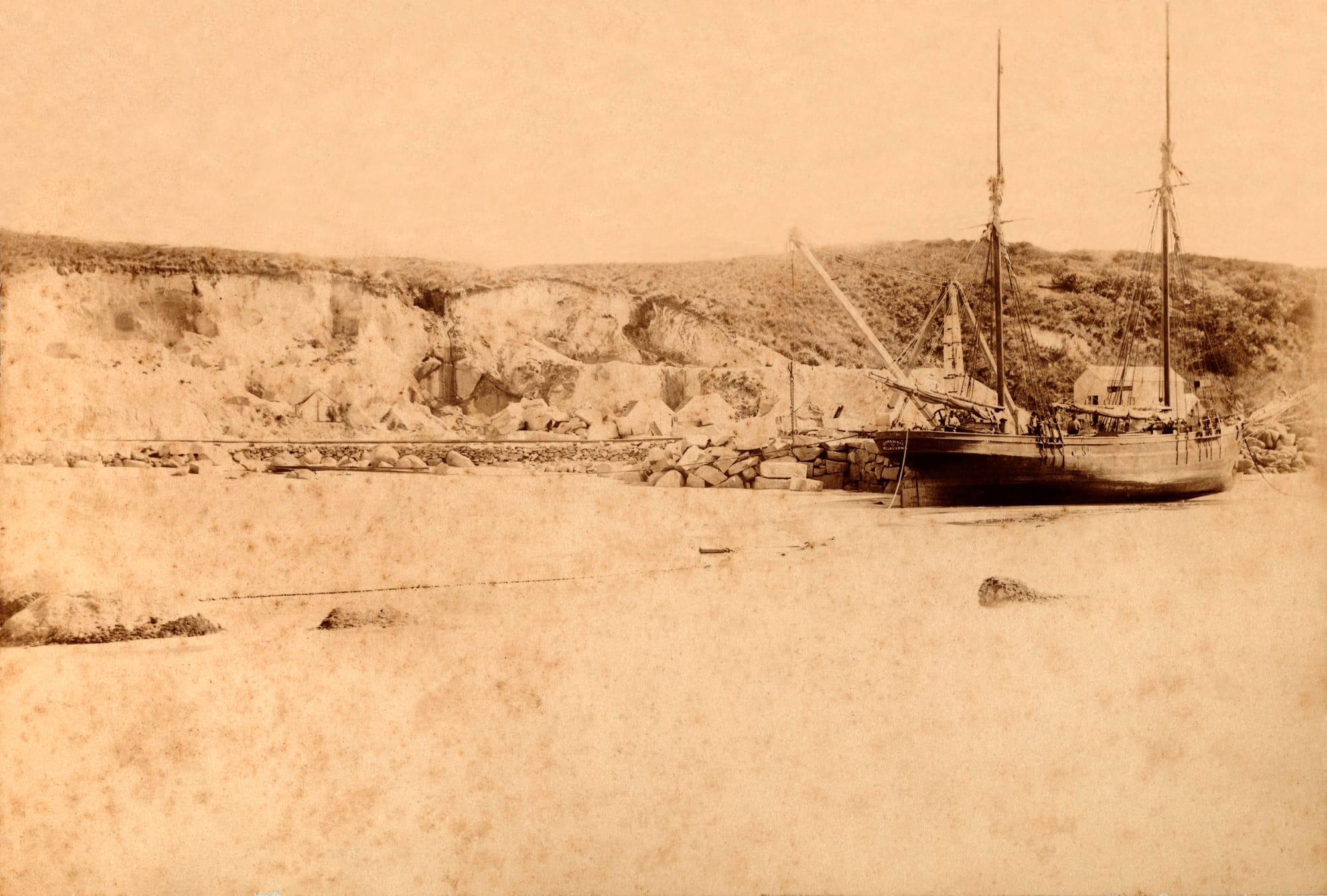
Without doubt, the best known is Cape Woolamai’s granite quarry, famously opened in 1891 by a Melbourne business to supply stone for a Collins Street building (the Equitable Life Assurance, demolished in 1962).
Local geological buff Mike Cleeland gave a talk at the Phillip Island Historical Society about the quarry, which he said operated for only two years: 1891 and 1892.
“It is not a big quarry….in total they only took out less than enough rock to fill a large room,” Mike said in his talk.
“When you’re at the Cape Woolamai quarry site you can often see rusted remains of the equipment used to split the hard granite into blocks of manageable size.”
He said the rock was quarried by drilling rows of holes, possibly by hand percussion drilling although power driven drills had been developed by that time.
Each hole was then filled with a “plug and feather” to split the rock: two pieces of iron similar to a pipe cut in half longitudinally, placed into the hold, then an iron chisel “plug” pushed in between the “feathers” to prise the rock apart.
Once a row of holes were filled with plugs and feathers, the plugs would be hammered with a heavy hammer until the rock split.
He said evidence can also be found of the use of explosives to break out large rocks.
Workers would then tram the blocks around on trolleys and there they would load them on the boat, taking advantage of the rise and fall of the tide.
The vessel would be brought in on high water, where a jib crane lifted them into the hold of the waiting vessel.
“When the return of high tide had refloated the ship, the weighty cargo was conveyed to Little Dock at the foot of Spencer St Melbourne and stores for Phillip Island were loaded for the return trip. The voyage occupied two days and the load of stone shifted was about 50 tons.”
The Kermandie sank with 37 tons of granite in the hold and a bloc of ten tons on the deck. Mike said it is believed the granite was not properly stowed, with the cargo shifting in bad weather, causing her to sink.


