

Life flipped upside down by Covid
Emma Grabham, Coordinator of BCH district nurses and palliative care team says Covid changed everything about the way they work.


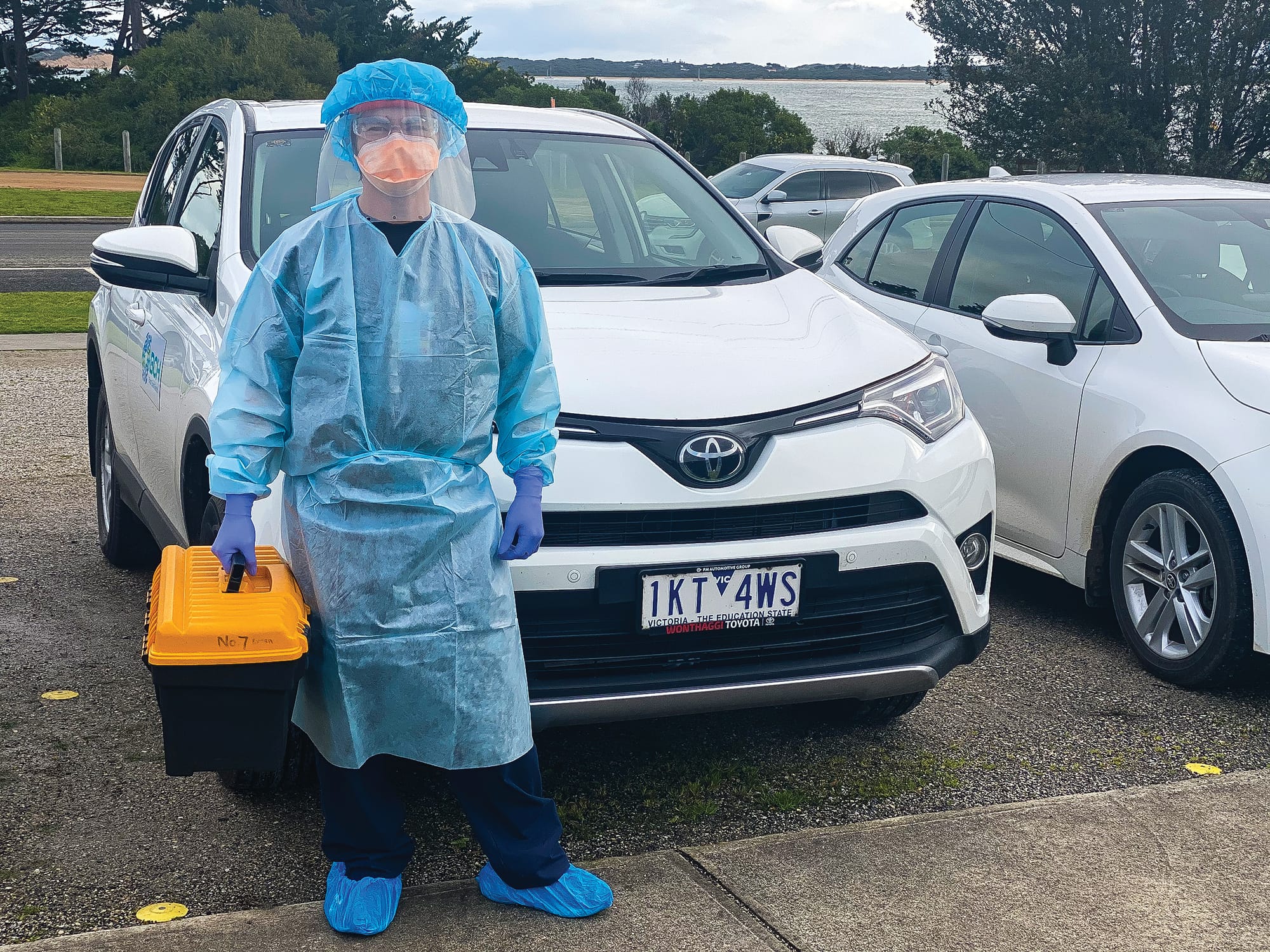
“At the Covid peak, district nurses had to wear full Level 3 PPD – gowns, N95 masks, eye protection and hair nets. They might see up to 10 clients per day, and have to change after each client.”
Emma Grabham, Coordinator of Bass Coast Health’s district nurses and palliative care team is explaining how Covid has changed everything about the way they work.
“Basically it has taken the job we love and flipped it upside down,” she said.
For the team out on the road, that meant wearing the hot and restrictive Level 3 gear, as well as changing at the back of their cars between clients, battling the elements. The team in the office also donned N95 masks and eye protection all day, because they interacted with the nurses.
Alongside managing the impacts of Covid on their own lives, the BCH staff had to work out the best way to continue to care for their clients. “We go into people’s home and see them when they are at their most vulnerable. We had to protect ourselves and our clients,” Emma said.
That involved changing what they wore – moving from uniforms to hospital scrubs – and how the workday was structured. “Instead of the entire team meeting at the San Remo office before heading out for work each day, we had to split them into different shifts,” said Emma.
The shifts meant the office never exceeded the permitted number of staff on site, as well as adding extra protection against infection. Working in shifts also meant if one person was diagnosed with Covid, it didn’t take out the entire team.
But it had an impact on morale.
“Splitting into shifts meant, depending on the rosters, you could go a long time without seeing colleagues. It was isolating. The social interaction with each other and with other teams was gone. We couldn’t even have a team meeting in real life.”
While restrictions have eased, Emma said healthcare workers are still in Covid-mode. As much as she would love to organise a Christmas get-together – face to face – for her team, the idea has been shelved. The risk is too great.
“Imagine if a bunch of nurses got infected because they went out to dinner or had a Christmas party,” Emma said wryly.
“At the end of the day, we are here for our community.”
Personal cost
Outside of their official roles, Covid had a big impact on the personal life of staff as well, Emma said.
A fear of infecting a family member was a prime concern for many workers, including Emma herself, who said being separated from her young daughter, who temporarily moved in full time with her father, was one the hardest things.
Dealing with misinformation in the community was also difficult.
“It was hard initially not to see it as personally disrespectful to healthcare workers,” she said. “When Covid first hit, here at work, there was talk of potential sites for makeshift morgues, then you’d go out somewhere and there’d be non-compliance … that was hard.”
For all the sacrifices, Emma said the pandemic has had some positive impacts.
“I think we have gotten good at being adaptive. After two years, the team just does it. For me, I’ve become more open to seeing things from the other side and understanding their perspective.”
As the community comes to terms with this latest phase of living with Covid, Emma believes the most important thing is to be kind to each other.
“The staff here are caring for your families and friends. You don’t have to be aggressive … just be kind.”


