

Island wildlife feeling the squeeze
Wildlife are being squeezed out of their habitat across Phillip Island by accelerated development.


Wildlife are being squeezed out of their habitat across Phillip Island by accelerated development – including hundreds of acres of upcoming major projects – creating increasing clashes with humans on private land.
That’s according to comments made by Cowes citizen scientist Ron Day during last week’s online meeting to discuss Nature Park’s new wildlife plan.
For the past two years Ron has conducted roadkill research on the Cowes-Rhyll Road, which has led to a ground-breaking virtual fencing trial, emitting lights and noise to limit animal deaths.
Speaking at the meeting, Ron said Phillip Island was set for major projects that would “gobble up” even more landscape, coming on the back of many years of growing urbanisation.
These included: about 80 acres with the planned sports hub on the corner of the Cowes-Ventnor Road; 100 acres for a new Vietnam Veterans museum; 110 acres on Gap Road and Back Beach Road for a new transfer station, as well as whispers of a future housing subdivision between Settlement and Ventnor roads.
“And this isn’t including Regional Roads Victoria’s plans to expand the Phillip Island Road, which could take away about another 100 acres,” Ron said.
He asked the researchers and government representatives at the Zoom meeting what was being done to accommodate this conflict.
“I am not against the likes of the sports hub, but the reality is human requirement continues to gobble up wildlife habitat,” said Ron, who has counted hundreds of roadkill in dozens of different animal species in his research.
“Wildlife are being squeezed out by development and will be forced on to remaining other properties giving them more grief than what they are currently experiencing. This in turn could result in further culling.”
Control humans?
Cowes resident Sue Saliba asked why the wildlife plan did not include measures to modify human behaviour, given increasing urbanisation was removing wildlife habitat.
PINP researcher Dr Peter Dann added Bass Coast Shire had a “strong view on urbanisation on Phillip Island and they seem to hold the line on that view very well”.
“Ultimately if urbanisation continues, the island will change incredibly and the flora and fauna will also,” Dr Dann said, adding human behaviour could be also changed through reduced speed limits.
Shire representative Diana Whittington said the state government’s Distinctive Areas and Landscape policy would lock in town boundaries and urban sprawl, while the government had also recently amended the 10/30 bushfire rule to stop vegetation removal on private land across the island.
PINP CEO Catherine Basterfield agreed Phillip Island’s growing human population was impacting wildlife, saying Nature Parks would look at creating more habitat.
Phillip Island Conservation Foundation president Jeff Nottle commented he would like to see more focus on “defencing, securing and enhancing habitat” on private and public land.
Ms Basterfield responded saying she welcomed any feedback and suggestions to improve the wildlife plan.
Earlier this year one of Australia’s peak conservation groups warned Phillip Island was at a tipping point of environmental loss.
Trust for Nature’s Port Phillip and Westernport manager Ben Cullen said Phillip Island was internationally-significant for its migratory birds and wetlands and it was “challenging” to have a growing population “side by side” with endangered animals and plants.
“Despite its international significance there’s still a lot of cleared land on the island and it lacks viable habitat connections and is desperate for revegetation work,” he said.
“At the moment it’s a tug-of-war. We have to make sure we don’t go too far downhill because that will have big implications. In many ways Phillip Island is almost the canary in the coal mine for conservation. If we don’t get it right on the island, other places will get it wrong.”
Ben said communities often “learn the hard way” about local extinctions, “realising species have gone only when they actually have gone”.
Roadkill
In last week’s Zoom meeting, Ron asked about roadkill figures.
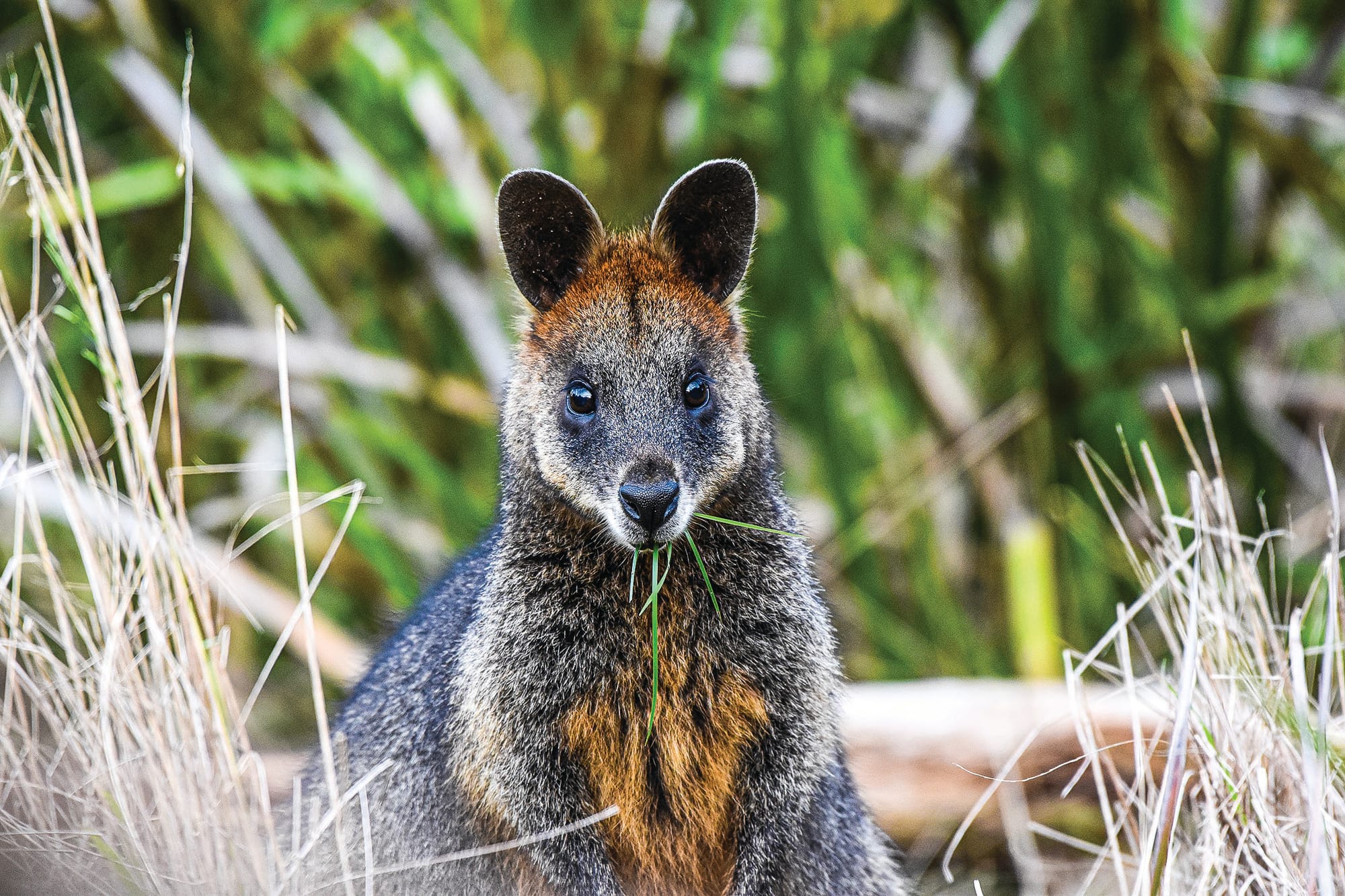
PINP researcher Dr Duncan Sutherland said on 57km of Phillip Island roads, about 300 wallabies were killed annually, about 10 per cent of the total population.
“Swamp wallabies are moving on to roadsides and having a major impact on the community,” Dr Sutherland said.
“The higher volume of traffic and higher speeds correlate to roadkill. At this stage we have no strategy to stop those interactions happening.”


