

Nature Parks reveals full pandemic damage
Phillip Island Nature Parks’ annual report paints an uncertain future for the attraction.


Phillip Island Nature Parks’ annual report paints an uncertain future for the attraction, while finally revealing the full financial hit from the pandemic to its bottom line.
The 2019/20 report – delayed because of the virus – reveals total tourism revenue was 30 per cent less than the prior year, with a 33.5 per cent decrease in visitors, and a 27.5 per cent drop in retail and food and beverage services, compared to 2018/19.
“As COVID-19 continues to evolve, we recognise that it is difficult to reliably estimate, with any degree of certainty, the potential impacts after the reporting date on the Nature Parks, its operations, its future results and financial position,” the report states.
The Nature Parks' revenue was $7.6 million less than the prior year, not including the May 2020 State Government lifeline of $8.8 million, which included “a letter of comfort”, committing further government funding and underwriting liabilities until November 2021.
“Based on the commitment by the government to support the Nature Parks in meeting its current and future obligations as and when they fall due, the Board has formed the view that the Nature Parks can continue to meet its commitments as a going concern for the foreseeable future,” the report states.
“COVID-19 created unprecedented economic uncertainty and continues to have wide-ranging impacts for the Nature Parks as well as the broader community on Phillip Island.”
The report states in the immediate aftermath of the virus, Nature Parks limited and deferred all non-critical expenditure by 28 per cent, versus the same period the prior year.
Visitors
Even before the pandemic hit – forcing the first closure in March – visitor numbers were down following the East Gippsland bushfires.
Yet for the first half of 2019/20, the Penguin Parade recorded revenue growth of 1.7 per cent despite a slight decrease in visitation, with premium visitor experiences strong, increasing by 1.4 per cent compared to 2018-19 and driving revenue growth.
In 2019/20 there were 757,846 visitors across all attractions compared to 1,121,274 in 18/19, with the penguin parade receiving 485,030 visitors (719,617 in 18/19) and the Koala Conservation Reserve receiving 118,253 visitors (182,745 the previous year).
The eco-boat had 7,414 visitors, with that attraction’s contractual agreement concluding in April 2020.
Before the pandemic, PINP continued to focus on China as the biggest market, with CEO Catherine Basterfield and Research Director, Dr Peter Dann even visiting China in November 2019.
However, the annual report states India continues to be “our fastest growing market”. The focus now, the report states, will be on building the domestic market “before expanding to international markets when travel confidence improves”.
Local residents increased their support of the Nature Parks, with sales of the locals pass increasing by 41 per cent, while PINP contributed more than $17,000 in donations to local groups including Change for Sam, Phillip Island and District Basketball Association and the Artists Society of Phillip Island.
Environment
PINP remains the island’s largest employer with 184 staff (122 full time equivalent), while 300 volunteers contributed 13,310 hours of work.
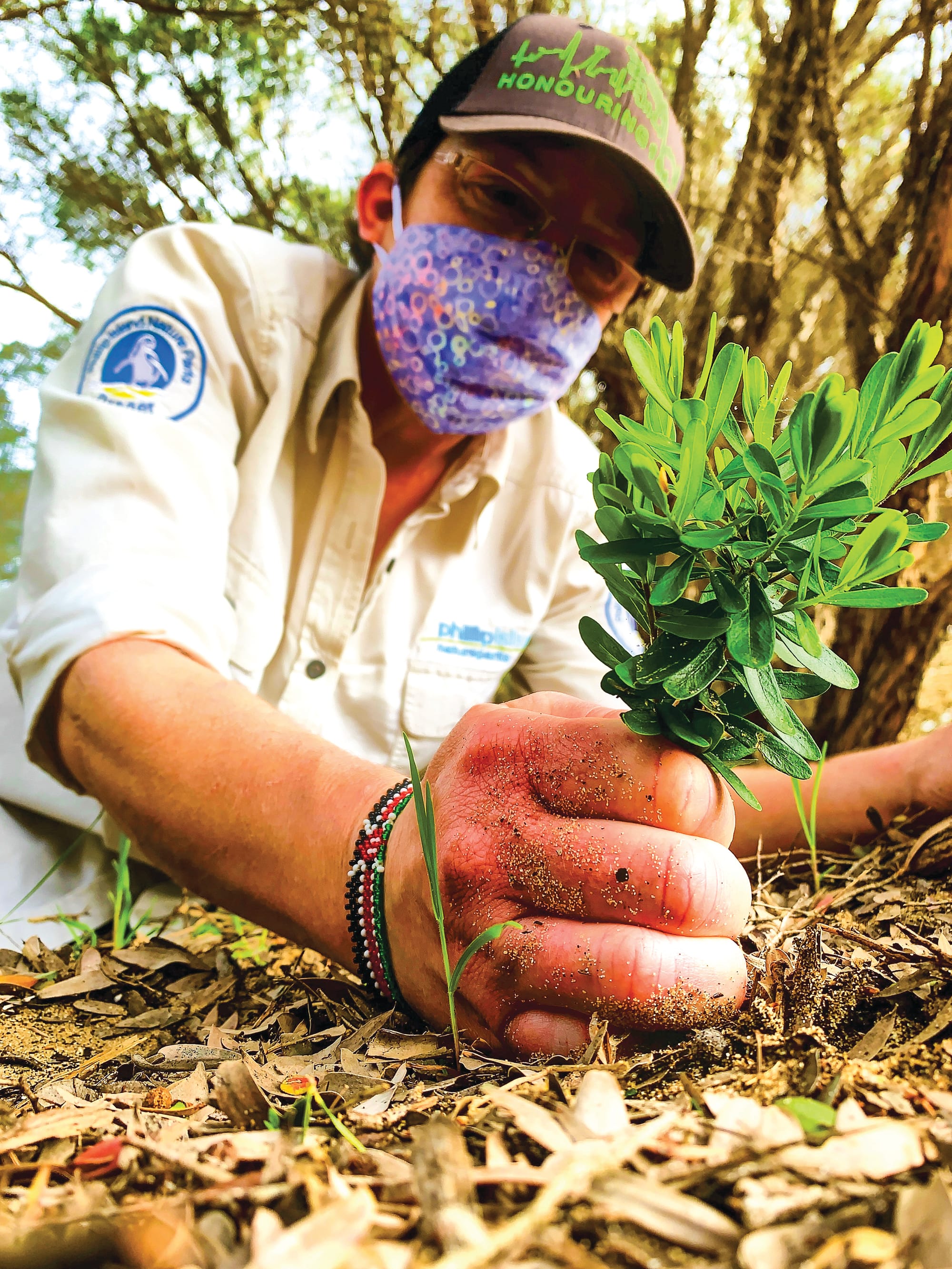
Due to COVID-19, many staff were redeployed to assist with conservation work, rehabilitating 26.4 hectares of habitat with 36,246 plants, caring for 13 bushfire affected koalas and counting penguins.
There was a nightly average of 1,250 penguins crossing the beach and an above-average 1.4 chicks per pair, with the current population tallying 32,000 adult penguins.
In April 2020, 289 citizen scientists from 37 countries spent 655 hours counting 281,197 seals from 14,289 images – a 40 per cent increase on 2018-19.
The Wildlife Clinic team cared for 77 penguins (119 in 2018/19) and 468 other native animals from 60 different species (419 in 18/19), responding to more than 970 calls (1,320 the previous year) for wildlife rescues and advice.
Staff released 56 bandicoots onto French Island, while Fairy Terns were found nesting at Rhyll Inlet in late 2019, the first time this species has nested on Phillip Island in decades.
Australia’s Threatened Species Commissioner, Dr Sally Box, endorsed PINP’s first Threatened Species Plan, which will reintroduce regionally threatened species, including Bush Stone-curlews and Long-nosed Potoroos.
The 28th year of Hooded Plover monitoring resulted in 19 breeding pairs, a 19 per cent decrease in nesting from the previous year, with nine chicks surviving, with the rate within range for maintaining a sustainable population.
Two feral cat detection dogs Marbee and Milly joined PINP, surveying 274km around the island, with 10 reports of foxes investigated and no physical evidence found. A feral cat tracking project was established on Cape Woolamai in May 2020.


