

Meet Phillip Island’s new bush stone-curlews
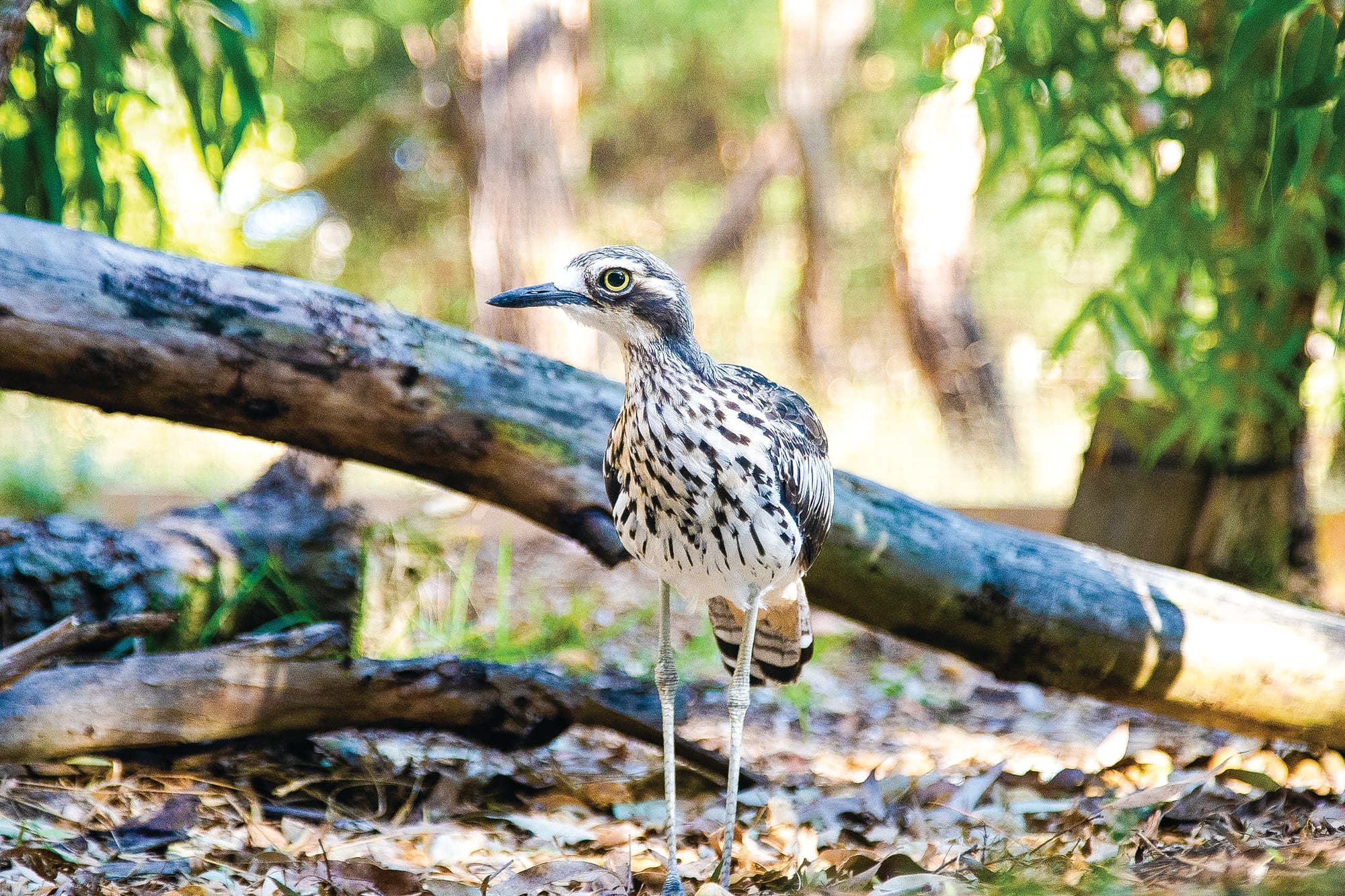
Phillip Island recently became home to bush stone-curlews for the first time in decades and the community is now invited to see the critically endangered birds up close.


Phillip Island recently became home to bush stone-curlews for the first time in decades and the community is now invited to see the critically endangered birds up close.
After arriving to Phillip Island Nature Parks in mid-2021 from Moonlit Sanctuary in Tyabb, the two bush stone-curlews have now moved into new specially designed aviaries in the Koala Conservation Reserve.
“We encourage the community to come and ‘meet’ the critically endangered bush stone-curlews, understand their plight and learn about the recovery efforts to bring them back from extinction on the island,” said Thomas Nixon, Phillip Island Nature Parks Threatened Species Officer.
“You can learn more about the role Phillip Island will be playing for their future survival and recovery efforts across Victoria, and more importantly meet one of us and ask questions,” he said.
“Bush stone-curlews can be a relatively cryptic species, so the opportunity to see them up close before they are returned to the wild is unique and special.”
Predation by foxes is a major threat to bush stone-curlews and was a key contributing factor to them becoming extinct from Phillip Island in the 1970s.
But now the island is fox-free, there is a unique opportunity to work towards the successful re-establishment of a self-sustaining population, similar to eastern barred bandicoot recovery efforts.
The Nature Parks is part of a coordinated recovery effort in south-east Australia which is working to create a series of safe havens where bush stone-curlews can be safely returned and the birds can prosper. Funding for the program on Phillip Island has been generously provided by the Penguin Foundation.
“Bush stone-curlews were identified through a structured decision-making process with community representatives and regional experts in 2019, as a priority species for reintroduction to Phillip Island” Mr Nixon said.
“Bush stone-curlews have no foreseen negative impacts on the existing values of the island and we hope to proceed with a wild release within the near future.
“One of the most exciting parts about this project is speaking to people that remember seeing bush stone-curlews on the island and telling them we have the opportunity to bring them back.”
One such resident is Les McFee, who remembers hearing the curlews only a few decades ago.
“I remember in the late 1960s on the hill north of Smith's Beach on the old Cleeland farm hearing that eerie screech of a curlew coming from what is now the Koala Conservation Reserve. It seemed so close, but in reality it was well over a kilometre away,” he said.
A dedicated team of volunteers have been feeding and caring for the curlews since their arrival last year, including Visitor Engagement Volunteer Karen Duffy.
“I love observing the birds we have and watching and learning their behaviours. Seeing them regularly, showing them to the visitors and being part of their care team is truly rewarding,” Karen said.
“It is a small part of a big picture, knowing that the result is hopefully these birds will again be resident on our beautiful island in the future.”
To find out more about the Koala Conservation Reserve, including opening times, visit: www.penguins.org.au/attractions/koala-reserve/


