

State government alert on Ross River
Executive Director for Communicable Disease said there have been 448 cases across the state to February 25.

The Department of Health issued a media release today, saying an increased number of cases of Ross River virus have been reported this summer.
People are being warned to protect themselves from mosquito bites.
Victoria’s Executive Director for Communicable Disease, Dr Bruce Bolam, said there have been 448 cases of Ross River virus across the state to February 25.
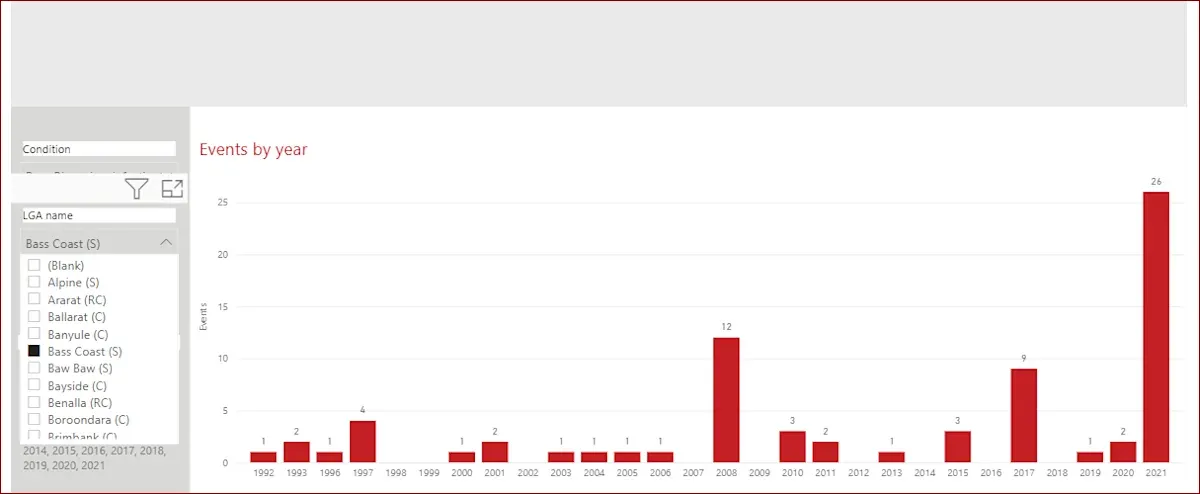
Bass Coast has recorded 26 of those cases.
The Advertiser is aware of three non-residents who have also tested positive after holidaying at Phillip Island or San Remo
Such cases would be registered at the permanent home address of the person, and not reflected in the Bass Coast numbers, as the Department of Health records cases by Local Government Area (LGA).
Figures from French Island are also not included in the Bass Coast total, as it is not part of the Bass Coast LGA.
When the Advertiser broke the news of Ross River cases on Phillip Island in January, both Bass Coast Shire Council and Bass Coast Health were unaware of any confirmed local cases.
Bass Coast was also not included in the state government’s health warnings on the Ross River virus.
A spokesperson for the Department of Health said Bass Coast was not considered an endemic area for the virus.
Records back to 1992 reveal this year is the highest number of cases recorded in the area in almost 30 years.
The previous highest number was 12, in 2008. In 2017, nine cases were recorded.
Single or less than five cases were recorded in the other years, with no cases recorded at all in nine of the 29 years since 1992.
Cases statewide
In a typical year, about 200 cases across Victoria are notified to the department, compared to the 448 this year.
In contrast, almost 2000 cases were notified in 2017 after widespread springtime flooding in late-2016 created massive mosquito breeding sites.
This summer, the department said the majority of the cases have been in residents of the Surf Coast, Bellarine and East Gippsland areas.
A viral infection transmitted through mosquito bites, Ross River virus disease occurs throughout most regions of Australia, particularly around inland waterways and coastal regions. Heavy rainfall, floods, high tides and warm weather increase mosquito numbers, resulting in higher numbers of cases.
Dr Bolam said the early summer conditions, particularly in coastal areas, were conducive to mosquito breeding.
The virus is passed between mosquitoes and certain animals, such as wallabies and kangaroos. Infected mosquitoes can then bite people, making them unwell.
Symptoms of Ross River virus can include fever, rash, headache, aching muscles and/or joints and fatigue. People experiencing symptoms should seek medical attention from their GP.
Onset of symptoms may be from 2 to 14 days following a bite from an infected mosquito. There is no evidence that Ross River virus can be spread directly from one person to another.
Many local councils work routinely with the department to monitor and limit mosquito numbers. Around 12 councils currently participate in the state mosquito-borne disease program and receive funding for mosquito surveillance and vector control.
Mosquito traps are set up in the field, and the mosquitoes that are caught are sent to Melbourne for testing.
“When mosquito numbers are high, and the lab detects virus in these mosquitoes, there might be an increased risk of acquiring Ross River virus in the coming days if the weather conditions are favourable,” Dr Bolam said.
“Mosquitoes need stagnant water to breed, but they also prefer mild, calm, and more humid air to fly and bite.”
Bass Coast Shire Council's program of monitoring or baiting mosquitos, run in the past through the Bass Coast Landcare Network, did not take place this summer.
In October last year, Council confirmed the program had not run for five years, as there had been no local mosquito-borne health issues.
However this month, a spokesperson said the mosquito monitoring program run by Bass Coast Landcare, with support from council, is now operating and is scheduled to run through until March.
“There are currently eight sites on Phillip Island that are part of this program," the spokesperson said.
Confirmed cases on Phillip Island have been recorded in Cape Woolamai, San Remo, Surf Beach, Wimbledon Heights and rural areas around Harbison Road.
Protection
Dr Bolam said people can take simple steps to avoid bites and protect themselves and their family against mosquito-borne diseases.
“Victorian mosquitoes can be active throughout the day, but the peak period is often around the late afternoon and into the evening as well as around dawn and dusk,” he said.
“Everyone is encouraged to wear long, loose-fitting clothes and use repellents containing picaridin or DEET on exposed skin.”
“People should ensure that insect screens fitted to doors and windows around the home are in good condition.
“Mosquito numbers can be reduced by getting rid of stagnant water around the home or campsites. Mosquitoes will breed in any receptacle that can hold water, including old tyres, fish ponds, unmaintained swimming pools, unsealed water tanks and pot plant holders.”
A range of information relating to protecting against mosquito bites is available on the Beat the Bite campaign page on the Better Health Channel.
For ways to beat the bite, visit https://www.betterhealth.vic.gov.au/campaigns/beat-the-bite.


